Let’s start this lesson with a review of some words and phrases we’ve seen in the last few lessons.
- hic/hoc est – this is
- hi/haec sunt – these are
- hic/hoc non est – this is not
- magnus – big
- parvus – small
- carnem comedit – it eats meat
- herbam comedit – it eats grass
- celeriter it – it goes quickly
- lente it – it goes slowly
- homo – person, human
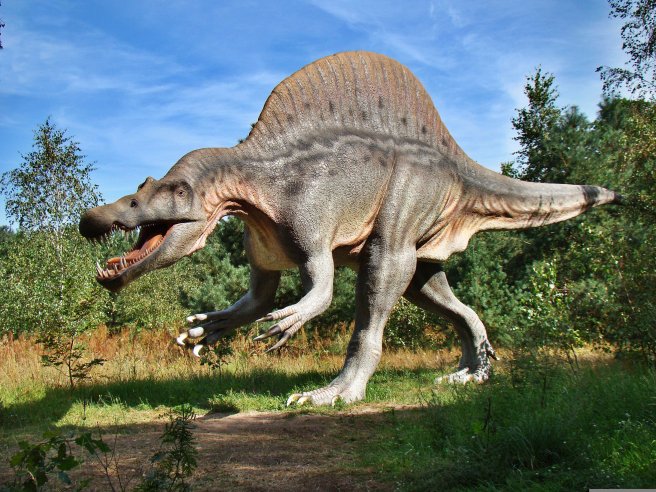
Now, let’s take a moment to read a dialogue between two homines. One of them is a teacher. We will call her magistra, which is the Latin word for a female teacher. The other is a student. We will call him discipulus, which is the Latin word for a male student. In the dialogue, the teacher will show the student a picture and ask questions about what is in the picture.
| magistra: | salve, discipule! |
| discipulus: | salve, magistra! |
| magistra: | hoc est animal. estne homo an dinosaurus? |
| discipulus: | animal est dinosaurus. |
| magistra: | estne hic homo? |
| discipulus: | minime, hic non est homo. hic est dinosaurus. |
| magistra: | estne hic dinosaurus? |
| discipulus: | certe, hic est dinosaurus. |
| magistra: | qualis (what kind of) hic dinosaurus est? |
| discipulus: | hic dinosaurus est magnus. hic dinosaurus non est parvus. |
| magistra: | ubi (where) est hic dinosaurus? |
| discipulus: | hic dinosaurus est in pictura. |
| magistra: | specta dinosaure! quid (what) hic dinosaurus comedit? |
| discipulus: | hic dinosaurus carnem comedit. |
| magistra: | specta dinosaure! quomodo (how) hic dinosaurus it? |
| discipulus: | hic dinosaurus celeriter it. |
| magistra: | macte, discipule! |
Next, considering the dialogue above, let’s find the Latin words which might match these English meanings?
(Answer Key)
- look at
- no
- well done
- hello
- yes
Finally, let’s see if you can create a similar dialogue using the same patterns as above with this picture:
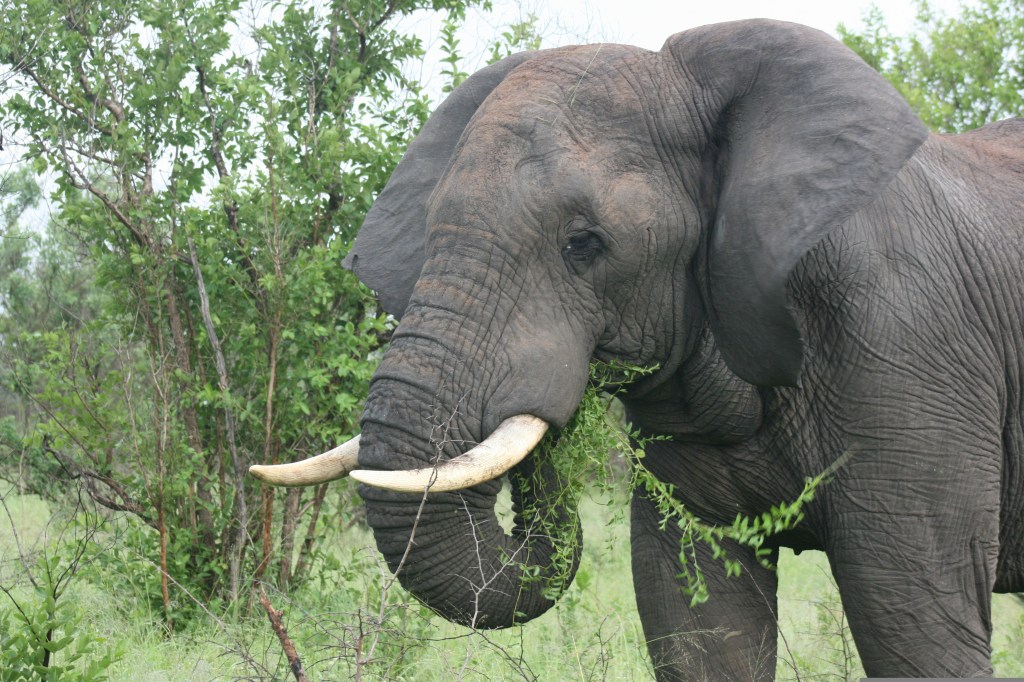
hoc animal est elephantus. (Answer Key)